

Morning Workshop
For a full, five-day experience: Monday through Friday, 8:30am to 6pm
The heart of Writing and Illustrating for Young Readers is its morning workshops, where attendees have the opportunity to workshop their manuscripts with an industry professional. You will be in small groups of 20 or fewer students in each class during the morning portion of the conference.

Registering for one of the morning workshops also includes:
-
20 hours of workshopping & instruction from a published author & your peers
-
Specific feedback from faculty on your manuscript
-
An agent/editor consultation on the first 750 words of your manuscript
-
An in-class visit from an editor/agent
-
The Afternoon Sessions (plenaries, HOWs, & break-out sessions) taught by industry professionals

Our 2027 Workshops will be announced soon!
Curious what our workshops look like? Check out our 2026 descriptions below. >
2027 Agents & Editors
Every participant who attends a morning workshop will receive a feedback session on the first 750 words of their manuscript (or a full picture book manuscript) during the week of the conference.
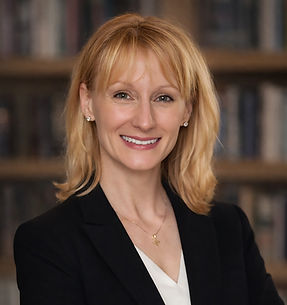
Colleen Oefelein
Agent
MacGregor and Luedeke Literary

Heather B. Moore
Managing Editor / Author
Precision Editing Group

Heidi Gordon
Agent
Tsunami Literary Ink

Joy Peskin
Editor
Farrar Straus Giroux Books for Young Readers

Lindsay Flanagan
Editor / Publisher
Eschler Editing / Roan & Weatherford Publishing

Lisa Mangum
Editor / Author
Shadow Mountain

Samantha Millburn
Editor
Shadow Mountain
Our 2026 Workshops


FROM IDEA TO PUBLICATION: A THREE-DAY NOVEL WORKSHOP
With J. Scott Savage (But you can call me Uncle Jeff)
Whether you’re arriving with a brand-new idea, a rough outline, a few opening chapters, or a completed manuscript, this workshop is designed to help you take the next major step in your writing journey.
Over three intensive days, we’ll workshop stories from the big-picture level down. Together, we’ll explore concept development, plotting, structure, character arcs, genre expectations, market positioning, and publishing pathways. We’ll discuss both traditional and independent publishing options, how to evaluate the feasibility of a project in today’s market, and how to create a realistic plan for moving forward.
Because of the larger class format, we will not be doing individual manuscript reads. Instead, we’ll work collaboratively as a group, using examples, exercises, discussion, and guided development sessions to help each writer identify where they are now, where they want their project to go, and the clearest path to get there.
By the end of the workshop, participants should leave with:
● A stronger understanding of their story and audience
● Clear next steps for drafting or revising
● A workable outline or development plan
● Greater understanding of publishing options
● Tools for evaluating and improving story structure
● A practical roadmap for pursuing publication
What to Bring:
● A notebook or laptop for writing and brainstorming
● Any existing materials related to your project (idea notes, outlines, synopsis, sample chapters, or completed manuscript)
● A willingness to rethink, revise, and develop your project
● Questions about writing, publishing, querying, or career direction
This workshop is ideal for writers at any stage—from those with only the seed of an idea to those preparing a manuscript for publication.
This is a THREE DAY workshop: June 17, 18, and 19, 2026 (Wednesday-Friday).
***Attendees may participate virtually or in person. Please contact wifyrstaff@gmail.com if you plan to attend virtually.***
Also included:
All Afternoon Sessions (Mon-Fri).
One-on-one with an agent or editor

THE DECIDING FACTOR: CREATING CHARACTER-DRIVEN SCENES [VIRTUAL INTENSIVE WORKSHOP]
What makes a compelling scene?
Scenes are the vertebrae that, together, hold up a plot’s structure. But how do we know when our scenes have the right shape, size, and craft elements to keep our characters’ stories moving forward?
In this intensive, we will study the anatomy of scenes, including setting, external events and internal response, and using cause and effect to move from one scene to the next. We will examine how to structure a character-driven scene, one that hinges on a moment of decision rather than an external crisis.
You will submit up to three distinct scenes, comprising 6,000 to 7,500 words total (no more than 30 double-spaced pages). Options for your three scenes could be: 1 scene each from the beginning, middle, and resolution of your novel; 3 scenes that represent a twist or turning point in your narrative; 3 scenes that you feel aren’t quite working. In addition, please send a one-page synopsis of your novel.
HOW THE VIRTUAL WORKSHOP WILL WORK:
Laura will be joining remotely via Zoom. For participants, there will be two options when you register for this workshop: "Fully Remote" OR "+Afternoons."
Fully Remote ($625 until 3/15; $675):
- The workshop, over Zoom. 8:30am to 12:30pm (Mountain Time)
- A 1:1 consultation with an editor or agent, also over Zoom
- Links for any afternoon sessions that the presenter is joining via Zoom, including plenaries and breakouts. (between 2pm and 6pm, Mountain Time)
- All sessions MUST be attended live, recordings will not be provided
+Afternoon ($725 until 3/15; $775):
- The workshop, LIVE over Zoom. 8:30am-12:30pm (MT). There will be a classroom provided on-site for all participants who want to gather (optional).
- A 1:1 consultation with an editor or agent
- All afternoon sessions on-site in Draper (2pm-6pm MT)

Writing Picture Books that Sing
Picture Book Workshop: the craft of making your story shine
It is a truth universally acknowledged that everyone can write a picture book. But it is also a truth, not-so-universally-acknowledged, that writing a good one takes work.
In this hands-on intensive, join picture book author Janet Sumner Johnson as she teaches you the craft of writing picture books that sing.
We’ll start with the basics, then dive deep into how to give stories their own unique voice that grabs a reader’s attention and has them coming back again and again.
This week of in-class work will include a mix of presentation, question-and-answer, and workshopping. We’ll discuss topics such as plotting, structure, voice, layers, heart, illustration, and more. With these tools in your belts, you’ll put them to use as we workshop together in class.
Bring the story you've been working on and/or come ready to develop one during the week.
In addition, each attendee will meet with Janet individually to review their picture book manuscript (750 words or less). Please plan to turn in a copy of your story on the first day of class.
We’ll discuss your strengths, things to work on, and answer any questions you may have. [If you don’t yet have a completed picture book manuscript, we can discuss ideas, or you can use the time for questions.]
Together, let’s take your picture book writing to the next level!

NOVEL WORKSHOP: POLISHING THE GEMS OF YOUR NOVEL
You want your novel to stand out and shine, and I'd love to help you get it there! In this class, we’ll use a “gemology approach” toward your writing: identifying the gems in your story, appraising them for both the story you want to write and for the market, and determining what treatments may enhance them. Your class submission materials will include a Novel Gems Questionnaire that will ask you to evaluate what inspired your story, why you wanted to write it, and personal connections (if you want to share). You’ll also draft a mission statement for both your novel and your writing life. We’ll work on craft to increase emotional resonance, create memorable characters, further develop voice, improve pacing, and strengthen setting. Each attendee will also meet with me individually to discuss your writer strengths, items to work on, and to prepare a revision plan and next steps to help you reach your goals. This class includes required reading.
Please submit the first 5,000 words of your novel (approximately 20 pages, double-spaced) by April 15, 2026. For those who register after April 15, 2026, please allow yourself time to complete and submit that by May 15, 2026.
Note: For those who register after this date, submission materials will be accepted up to the day the conference starts.
(Attendees who sign up after these dates will get a copy of the questionnaire in class to complete during the conference week.)

[WORKSHOP FULL] MAKING FACTS MATTER: Writing Story-Driven Nonfiction for Picture Books and Middle Grade
I love diving into the deep ocean of research. But finding the facts isn’t the hard part. The hard part is making facts matter—giving them shape, voice, and a reason to live on the page.
That’s what we’ll work on together.
I’ll share examples and challenges from my own writing (The Witness Trees, Decide & Survive: Agent 355, and many others) and from books I’ve edited at Bushel & Peck (Stuck! The Story of La Brea Tar Pits, The Museum on the Moon, Heroes of World War II, and more). Together, we’ll look at what makes nonfiction sing and what makes it stall.
We’ll cover the essentials—structure, pacing, scene—while digging deeper into craft that makes the difference:
Information layering—what goes where, and why
Metaphor—making the abstract land
Persona—because even true stories need a guide worth following
Through mini-lessons, discussion, writing exercises, and workshop feedback, we’ll generate pages, strengthen drafts, and talk about what editors are actually looking for.
No advance submission required, though you’re welcome to bring a work in progress. Or bring an idea (or a pile of ideas). Or come with an open mind and an open heart, ready to create something new during the week.
THIS WORKSHOP IS FULL.

[WORKSHOP FULL]
GETTING READY FOR THE FULL NOVEL WORKSHOP
So Many Parts. So Many Pieces. But Are They Working?
I love starting a novel. There’s so much promise, so much hope, and so much excitement. Even the icky middles are okay if I’m writing with direction. But here’s the truth--if I don’t share my work with other readers while writing, my first big revisions are harder. Much harder.
In this class, I’ll be there to support you as get your novel ready to submit. We’ll have a meeting or two or three as a group. There will be lots of questions from me, and I’ll answer your questions as you prepare your best work for submission.
By March 31, you’ll be required to submit 30,000 words—your beginning, part of the middle, the climax, and the end. During June, we’ll talk structure, emotion, and strong writing. And we’ll dig in deep on your novels. We’ll also have a couple of guests to help us with our query letters and just to answer a few business questions.
This class caps at 8 students.
PREREQUISITE: To attend this class, you must have attended two past morning workshops at WIFYR or submit a 10-page writing sample for approval.
This workshop is full.

[WORKSHOP FULL] NOVEL WORKSHOP: REVISION ROADMAP
So, you finished writing a chapter, the first half of your novel, or maybe even an entire draft. . . . huzzah! Now what?
Now, we revise!
In this class, we’ll use Erin’s revision roadmap to tackle developmental edits that will ensure your plot, characters, and theme are all working together to build the strongest story possible. We’ll identify your characters' backstory wounds and make sure the plot changes your characters, page by page. We’ll tackle plot points, especially four critical scenes so that the pacing never lags, tension never quits, and each scene brings your character closer to that all-important climax.
Whatever stage of your novel you are in (from outlining to full draft), this class will help you think through the building blocks to make your story great. You will leave with either a strong revision plan for your manuscript or a solid plan for writing that first draft. All students will receive critique from Erin Stewart, as well as a class critique.
Materials to Submit before class:
· First 3 chapters (or first 7,500 words) of your latest draft
· A 1-page synopsis of your novel
This workshop is full.

[WORKSHOP FULL] FULL NOVEL WORKSHOP
Jennifer Adams has worked as a publishing professional for 25 years. As an editor at Deseret Book, Quirk Books, Sounds True, and Gibbs Smith, she has edited picture books, middle grade, young adult, and adult--both fiction and nonfiction. With her depth of experience as an editor, she will help you look at your novel with fresh eyes and find the things that need to be reworked, cut, ironed out, or reimagined.
In her life as a writer, Jennifer has published 65 books, including picture books, activity books, poetry, literary nonfiction, cookbooks, and board book originals. Her BabyLit series, which introduces small children to the world of classic literature, has been featured in The New York Times, The Wall Street Journal, Vanity Fair, Parents, and Wired. It has sold a combined 2.5 million copies and has been translated in 10 languages.
Jennifer is a sought-out speaker and teacher, teaching at many writing conferences and workshops and working as adjunct faculty in the Linguistics Department at Brigham Young University.
As a bookseller, Jennifer works weekends at The King's English Bookshop, where she reads widely and rubs shoulders with readers of all kinds and all ages, staying abreast of what the market wants, and honing her ability to match the perfect book to the perfect reader.
In this full novel workshop, we will explore big picture questions of setting, character arcs, plot, structure, and dialogue. We'll learn best practices for critiquing each other's work and how to digest and incorporate feedback from other workshop members. Jennifer will provide feedback on each novel, including tracked changes in the manuscript itself and a cover letter that gives overall feedback.
Please submit the first 30,000 words of your novel by April 15, 2026. Send the remaining 30,000 words by May 15, 2026.
PREREQUISITE: To attend this class, you must have attended three past morning workshops at WIFYR or submit a 10-page writing sample for approval.
THIS WORKSHOP IS FULL.

[WORKSHOP FULL] FULL NOVEL WORKSHOP: SWEATING THE SMALL STUFF
Participants will each turn in a 65,000-word manuscript. Tim will give each individual feedback on their novel, commenting at the sentence and paragraph level, through track-changes in the manuscript itself, as well as providing a detailed cover letter that looks at larger issues. In the workshop, we will examine what a final edit is all about. It’s a lot more than just copy-editing.
By the time I get to the “Sweating the small stuff” revision of a manuscript, some of the excitement of invention has, inevitably, worn off. I’m already beginning to get excited about sending it off into the world. I know I’ve got to read the darn thing again, for the umpteenth time, and read it carefully, to catch typos and obvious gaffs, but I have to wrestle with my impatience. Primarily, sweating the small stuff is about diligently correcting, cutting, and polishing. It is seldom about actually adding anything, let alone–Gasp!–making a wholesale change. What I want to do this week is give you an extensive, practical checklist of things to look for in the cutting and polishing process, while also providing ways of looking at your manuscript from different angles to see if there is still more you might infuse into the story to give it more energy and make it all the more un-put-down-able.
PREREQUISITE: To attend this class, you must have attended three past morning workshops at WIFYR or submit a 10-page writing sample for approval. Apply here.
THIS WORKSHOP IS FULL.